
Cherry Tomato
Solanum lycopersicum var. cerasiforme
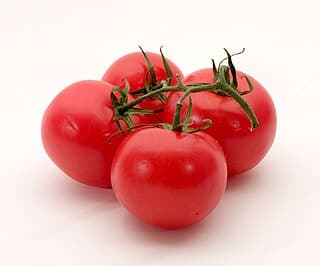
- Days to harvest
- 75–90 days
- Sunlight
- 6–8 hours/day
- Watering
- 1–2 per day
- Plant spacing
- 45 cm
- Minimum container size
- 40cm deep × 35cm wide
- Container-friendly
- 1 plants per container
- Estimated yield
- 250 kg / 100m²
- Life span
- annual
Climate Requirements
- Ideal temperature
- 21-32 °C
- Annual rainfall
- 1000-2000 mm
- Humidity
- 50-70%
- Heat tolerance
- moderate
- Drought tolerance
- moderate
Moderate heat tolerance but fruit set drops above 35°C. In urban KL, provide afternoon shade during El Niño. Water deeply but less frequently to encourage deep roots.
Soil & Planting
Planting method
Transplanting from nursery seedlings
Soil requirements
Rich, well-drained soil with compost, pH 6.0-6.8
Companion Plants
- Sweet Basilstrong
The most documented companion pair: basil volatile compounds (linalool, estragole) repel thrips, aphids, and whitefly from tomato; anecdotally reported to enhance tomato flavour; both share similar water needs
- Spring Onionstrong
Allium compounds in soil suppress Fusarium and Verticillium — the main soilborne wilt diseases of tomato in SEA
- Shallotmoderate
Shallots' allicin root exudates create chemical barrier against soilborne fungi near tomato root zone
- Mintmoderate
Mint repels aphids, whiteflies, and flea beetles; aromatic oils mask tomato scent
Plants to Avoid Nearby
- Eggplant
Eggplant and tomato are both Solanaceae; planting adjacently concentrates bacterial wilt, TYLCV whitefly vectors, and Phytophthora blight in a confined area, creating severe outbreak risk
- Bird's Eye Chili
Cross-Solanaceae disease vector concentration; particularly TYLCV and CMV transmitted by shared whitefly/aphid populations
- Mustard Greens
Tomato root allelopathic compounds suppress Brassica germination and seedling establishment
- Spinach
Tomato is allelopathic to many leafy greens; root exudates can suppress bayam germination and slow establishment
- Bok Choy
Allelopathic competition — tomato root compounds suppress Brassica seedling establishment
- Papaya
Both are attractive to similar whitefly populations (Bemisia tabaci) that vector TYLCV (tomato) and CMV (papaya); adjacency multiplies vector pest pressure
- Sweet Corn
Both are heavy feeders; severe nitrogen and phosphorus competition in shared beds; tomato also competes with corn for height and light; corn pollen can also cause tomato flowering disruption
- Kale
Brassica root compounds compete with tomato; shared whitefly and aphid pest pressure
- Kailan / Chinese Broccoli
Kailan shared pest pressure with tomato; both attract whiteflies that vector multiple diseases
Common Pests & Diseases
Safety Notes
Observe 7-14 day PHI after chemical pesticide application. Wash thoroughly before consumption. Use organic neem oil spray as alternative to synthetic pesticides. Avoid harvesting immediately after fertiliser application.
Market Demand
Very high demand; staple in Malaysian cooking
Regional Notes
Best during dry season; needs staking
Sources
- Vegetable Growing Guide for Malaysia — DOA Malaysia · Last reviewed: 2026-04-12
Wikimedia Commons, Public Domain
Category: Fruiting Vegetables